

How To Clean Cast Iron Fact Vs Fiction
Take you ever dreamed of finding a buried treasure? Many of u.s.a. have, just the reality is that not too many pirates' chests are still waiting to be establish. However, "treasure" can be defined in many means. In the farm kitchen, cast iron cookware is treasured by many.
Cast iron pots and pans have been used for hundreds of years; many have been passed down through generations. Today, many people don't know how properly to care for, make clean or refurbish bandage iron pots, making it possible for the savvy treasure hunter to discover gems only waiting to be returned to use.
Why Choose Bandage Iron?
Bandage iron cookware is versatile and durable. It can go from stovetop to oven and back again if necessary. It heats evenly and holds the heat well, making it excellent for browning meat or simmering stews and soups. A bandage iron griddle will yield fabulous pancakes and French toast. And, with a little bit of care and proper treatment, a bandage iron pot'south surface will be as nonstick as modern cookware.
Once y'all've institute your rusty, filthy treasure and are ready to begin the restoration process, you need to do some work. Depending on what grimy problems you lot're facing, you have several options to refurbish cast iron. (The video beneath covers the aforementioned basic steps equally I do here.)
Step 1: Burn Off Baked-On Mess
One of the simplest means to remove the baked-on, grimy accumulation of gunk from your bandage iron pan is to use the self-cleaning cycle of your oven. (Caution: Don't utilize this method with wooden handled pans.)

Identify the pan upside down on a rack in the oven and run one self-cleaning cycle. After the oven has cooled, you'll be left with pans coated with fine ash and perchance rust. (Read on for data on how to bargain with rust.) As a bonus, you'll also have a clean oven.

1 give-and-take of caution: Leaving your oven rack in the oven during the self-cleaning wheel might darken the metal, and the rack might be slightly more hard to slide in and out.
(Don't have a self-cleaning oven? That's OK. Click hither for an alternative bandage atomic number 26 cleaning process.)
Pace 2: Remove Rust
After cleaning the pan in your oven, soak the pan in a solution of half white vinegar and half water to remove accumulated rust. Find a container that's big enough to hold the rusty pan and completely submerge it into the solution. Permit it soak no longer than ane to four hours. The acrid in the vinegar volition dissolve the rust, but if the rust doesn't dissolve completely, a plastic scrub brush will loosen stubborn areas.

If yous leave the pan in the vinegar solution for too long, the acrid volition start to dissolve the pan and harm it, so bank check the condition of the pan oftentimes while soaking. The more than rust on the cast iron pan, the longer it will demand to soak. When yous're satisfied that the rust is gone, protect your easily with rubber gloves, remove the pan from the vinegar solution and rinse thoroughly under running water. Dry with a kitchen towel, then place the pan into an oven prepare at a low temperature; broil for a few minutes to make sure the pan is completely dry.
Footstep 3: Oil Up and Flavor
It's the nature of cast iron for a faint sheen of rust to class on the surface almost immediately as the pan dries. Use fine sandpaper to remove the light rust, then wipe with a soft rag to remove dust. Using a paper towel, immediately cover the pan with a thin blanket of vegetable oil or shortening to forestall rust from returning.
Now that your pan is costless of rust and grime, it needs to exist seasoned before you tin cook with it. To season the pan, coat it with a thin layer of vegetable cooking oil or vegetable shortening. Place the pan upside down on a rack in your 350- to 400-degree-F oven for well-nigh 45 minutes. By placing the pan upside down, backlog oil will bleed off rather than form a gooey pool in the bottom of the pan. Identify a cookie canvas lined with aluminum foil on the lower rack of the oven to catch whatsoever drips.
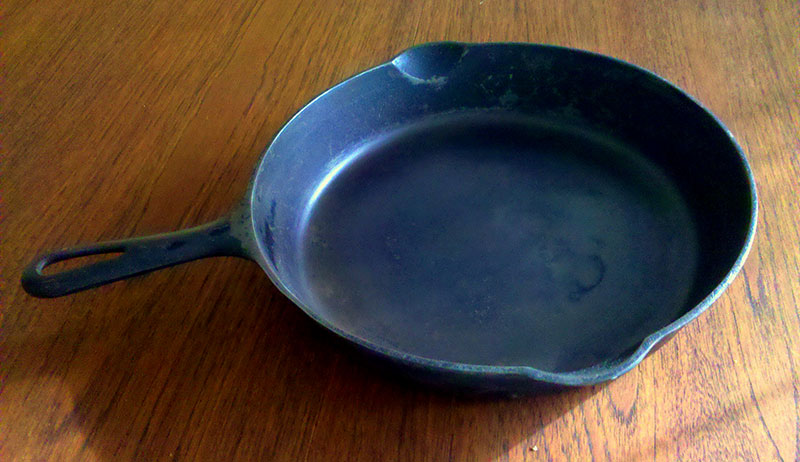
Equally it heats, the oil volition menstruum into nooks and crannies in the pot's surface, and form a nice, smooth coating. Be sure to utilise the oil in a sparse layer so it doesn't puddle when information technology heats.
For the best results, you should echo this seasoning process three or four times earlier using your pan to cook. After that, cooking will continue the seasoning process and your pan eventually will develop the nice, shine, black patina treasured in a well-cared-for cast fe pan.
Step 4: Maintain Cast Atomic number 26

A well-seasoned cast atomic number 26 pot is not difficult to keep clean. After using information technology, simply rinse nether hot water and utilise a plastic scrub pad or scrub brush to remove any stubborn bits of food. Immediately afterwards washing, dry out the pan with a kitchen towel.
To make sure the pan is completely dry, place it on a stove burner turned on low for a few minutes.
Then, while the pan is nevertheless warm, carefully glaze the inside of the pan very lightly with cooking oil. This will preclude any rust from forming in the nicks you may accept made in the surface. Any skillets or Dutch ovens that take lids should be stored uncovered or should have a folded newspaper towel placed between the pan and the hat to provide air flow. This keeps moisture from edifice and potentially causing rust. Never store food in a cast iron pot—the acids from the food will harm the seasoning—and never put cast fe in the dishwasher. Hither are some boosted tips and facts:
- Using bandage iron cookware is a proficient way to add iron to your nutrition; the food cooked in it volition blot a flake of the mineral.
- Don't pour cold liquid onto a hot pot. The sudden temperature change could cause the pan to crack.
- Always proceed thick potholders handy. You cannot handle a hot pot's handle without them.
- Never soak your pan in water.
It's not difficult to restore cast atomic number 26 cookware, and once restored, maintenance is simple. So if you lot are not already cooking with bandage atomic number 26, get on your ain treasure hunt.
Rust or caked-on, rancid grime are reasons many perfectly practiced cast iron pots and pans accept been shoved to the back of kitchen cabinets, buried in boxes in a basement, or stored in piles of junk in the corner of a barn. If you don't take your own pot that'south awaiting your attention, ask your relatives and friends what they have tucked away. If those avenues neglect, endeavour yard sales, barn sales or flea markets to find cheap pots and pans in need of refurbishing.
eBay and Craigslist are also good resource for finding sometime cast iron cookware, only exist careful: Only look at local listings. Cast fe is heavy and aircraft costs can apace turn a bargain into an expensive project. Persevere: It will be worth the search. A piffling time and effort spent refurbishing a pan volition yield a treasured slice of cookware that will provide years of service for y'all, your children and even your grandchildren.
To larn more most cast fe, see Hobby Farms stories including viii Foods That Taste Amend in Cast Iron, 3 Recipes that Flaunt Cast Iron'southward Versatility, and 4 Cast Iron Kitchen Accessories.

Source: https://www.hobbyfarms.com/clean-and-refurbish-cast-iron-6/
Posted by: smithstord1954.blogspot.com
0 Response to "How To Clean Cast Iron Fact Vs Fiction"
Post a Comment